
Lynchburg–Moore County Criminal History Checks
Start with the office that made the record. The Moore County Sheriff's Department is the local route for an incident report, arrest report, booking status, or sheriff-held warrant confirmation. Filed misdemeanor matters and early felony proceedings go through Moore County General Sessions. The Circuit Court Clerk holds Moore felony case files after indictment or bind-over. This division matters because an arrest report, jail booking, and final judgment are distinct records.
- Call the Moore County Sheriff's Department for an agency report, a recent booking, present custody, or a locally held warrant.
- Describe the exact record and give a report number, date, place, or subject name when known.
- Ask the Moore clerk to search General Sessions for misdemeanor matters and early felony proceedings.
- For a felony that moved forward, obtain the linked Circuit case number and request the docket or judgment.
- Use TBI TORIS or TDOC FOIL only when the question fits the statewide record each system publishes.
A full local search may need more than one call. The sheriff can establish what its agency recorded, while the clerk can establish what charges were filed and how the court resolved them. For more county-wide detail, use the Moore County criminal-history overview.
One Lynchburg–Moore County Government
Lynchburg is not layered over Moore County like a separate city bureaucracy. UT Extension reports that Lynchburg and Moore County consolidated in 1988, creating one of Tennessee's three metropolitan governments. MTAS identifies the metropolitan-government charter under T.C.A. §7-1-101 et seq., with a 1987 charter date. The audited Moore County financial report also documents the consolidated governmental structure and departments. This structure explains why a searcher does not find one Lynchburg police records office and another Moore County sheriff office serving identical ground.
The official CTAS Moore County profile confirms the county and its incorporated-place setting. State program material can supply context for Tennessee justice agencies, but it does not establish the contents or outcome of a local Lynchburg record.
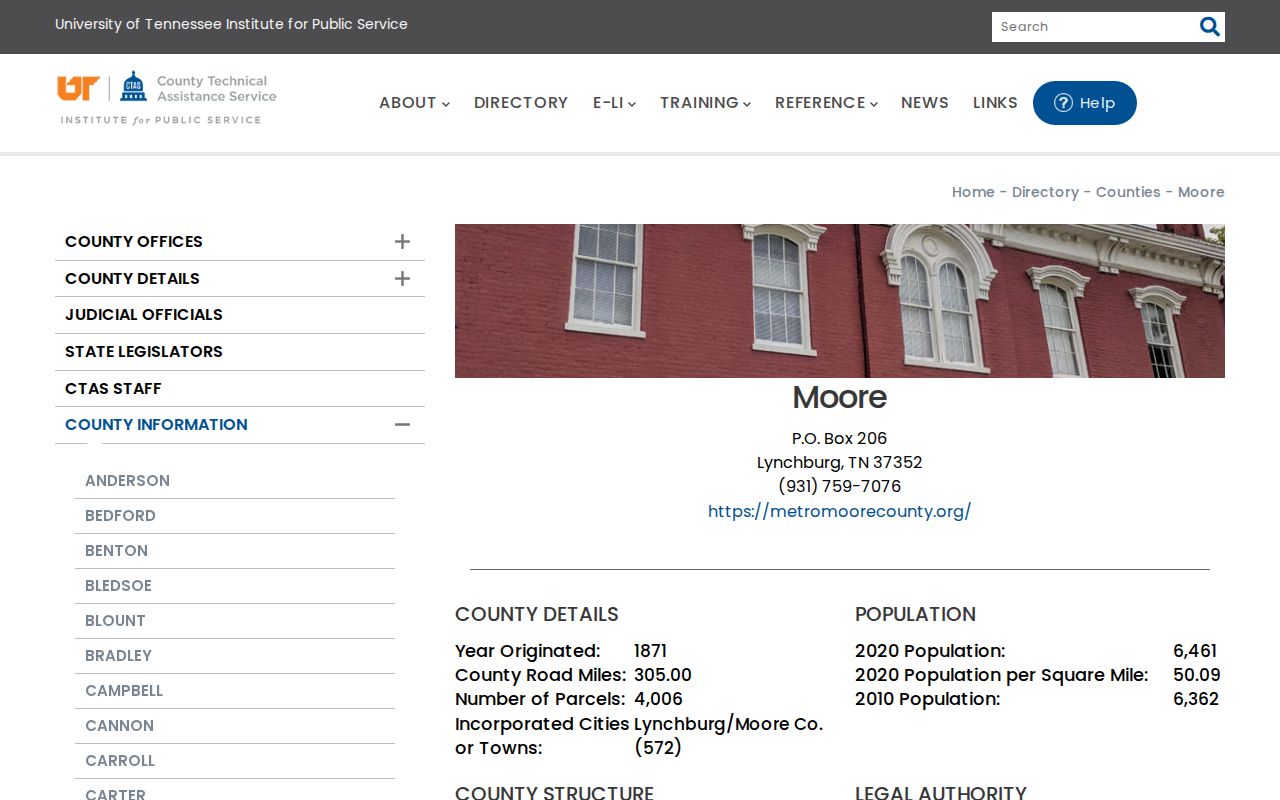
That official profile supports a single local city page, not invented pages for unincorporated places or duplicate law-enforcement systems.
Records at the Lynchburg–Moore County Police Department
No separate Lynchburg Police Department was found in the official material. The Moore County Sheriff's Department at 58 South Elm Street, Lynchburg, TN 37352 is the direct local law-enforcement contact, and its telephone number is 931-759-7323. No dedicated web records page, request email, PDF form, fee schedule, booking roster, or blotter was located. The telephone and counter route is therefore the main official channel, not a weak substitute for an online portal.
Ask for a specific existing record. Useful terms include incident report, offense report, arrest report, booking sheet, present jail status, warrant confirmation, dispatch or 911 material, and body-camera video. Give the incident or report number when known. Otherwise, provide a narrow date range, location, record type, and subject name. Ask whether the office requires a written request, what can be inspected, what may be copied, and whether a cost estimate is available before production.
Moore County Sheriff's Department
58 South Elm Street
Lynchburg, TN 37352
931-759-7323
Call first for current hours, request instructions, and the correct custodian.
The 1988 Lynchburg Records Shift
The metropolitan arrangement is the key event in Lynchburg's present record map. UT Extension describes the 1988 consolidation and the local history behind it. MTAS records Lynchburg's original incorporation date as February 1, 1841, but today's charter folds the former municipal-court function into General Sessions. A person who remembers a city government should not assume that every old office still operates as a distinct record custodian.
The UT Extension history of Moore County supplies the consolidation and local-government context.

The history helps explain why a modern Lynchburg records search moves through metropolitan and county-named offices without leaving the same local government.
Booking and Arrest Records in Lynchburg–Moore County
No separate Lynchburg holding facility or official city arrest log was documented. The Moore County Sheriff's Department is the contact for a Lynchburg-area booking. Ask whether the person is currently held, transferred, or released, then request the booking number, booking date, arresting agency, alleged charge, bond, court assignment, and release or transfer status. Initial booking charges remain allegations and may change after prosecutor and court review.
A city-location arrest begins several record streams. The arresting agency creates an incident or probable-cause report. Booking staff record intake details and fingerprints. General Sessions creates the early court file. A felony later may receive a Circuit number. Tennessee Highway Patrol or another agency can also make an arrest in Lynchburg, so confirm which agency created the report before sending a request. The Moore County arrest search provides the deeper county booking and custody route.
Lynchburg Cases in a Four-County District
Lynchburg–Moore County belongs to Tennessee's 17th Judicial District with Bedford, Lincoln, and Marshall Counties. The Administrative Office of the Courts lists M. Wyatt Burk, J.B. Cox, and Forest A. Durard among the district Circuit, Criminal, and Chancery judges. Terry Gregory is the listed Moore County General Sessions judge, and Linda Wolaver is the Circuit Court Clerk.
This regional bench does not send Moore filings to a neighboring county clerk. Ask the Moore clerk for the local file. General Sessions handles preliminary felony steps and can hear eligible misdemeanors when the accused waives grand-jury investigation and jury trial. If a felony is bound over and indicted, ask whether the matter received a new Circuit number. Requesting both identifiers prevents a false gap between the early and later docket.
Note: A judge's multi-county district role does not change which clerk maintains a Lynchburg–Moore County case file.
The Lynchburg–Moore County Municipal Court File
Official research found no standalone Lynchburg municipal-court lookup. The metropolitan charter consolidates the former municipal-court role with General Sessions. Do not invent a city portal or assume that a failed city-court search means no case exists. Contact the Moore clerk and identify whether the request concerns General Sessions or Circuit/Criminal Court.
| Court Structure | Moore County General Sessions plus the 17th Judicial District Circuit/Criminal Court. |
|---|---|
| Cases Heard | General Sessions handles preliminary felony matters and eligible misdemeanors; filed felony prosecution proceeds in Circuit/Criminal Court. |
| Lookup Channel | Telephone or counter request to the Moore County clerk; no official Lynchburg municipal portal was located. |
| File Contents | Case number, court, filing date, charge and statute, bond, counsel, events, plea, disposition, judgment, sentence, costs, and later public orders when available. |
| Copies and Fees | Ask for plain or certified copies, current charges, payment methods, delivery options, and archive retrieval time. |
A docket sheet is often the best first request. It identifies which pleadings, judgments, or orders matter and may reduce copy costs. For an old case, ask if the file is onsite, archived, or held by the Tennessee State Library and Archives.
No Lynchburg Portal: Two Offices
The absence of a local online portal makes routing more important. Use the sheriff for agency-created reports and custody facts. Use the clerk for filed charges, docket events, judgments, and certified copies. Neither office's response replaces the other. A sheriff booking can exist before a court filing, while a court disposition can differ from the charge recorded at intake. Tennessee's county-clerk service lists a Lynchburg office, but that service is not the Moore criminal-court docket.
For a public-record request, state whether inspection or copies are wanted and request an estimate. Tennessee's Office of Open Records Counsel says an agency need not answer broad questions, perform research, or create a new list. It must respond to a request detailed enough to identify existing records. If prompt production is impracticable, the usual TPRA framework calls for availability, a written denial with legal grounds, or a written time estimate within seven business days.
The MTAS Lynchburg metropolitan-government directory shows the official local-government listing.
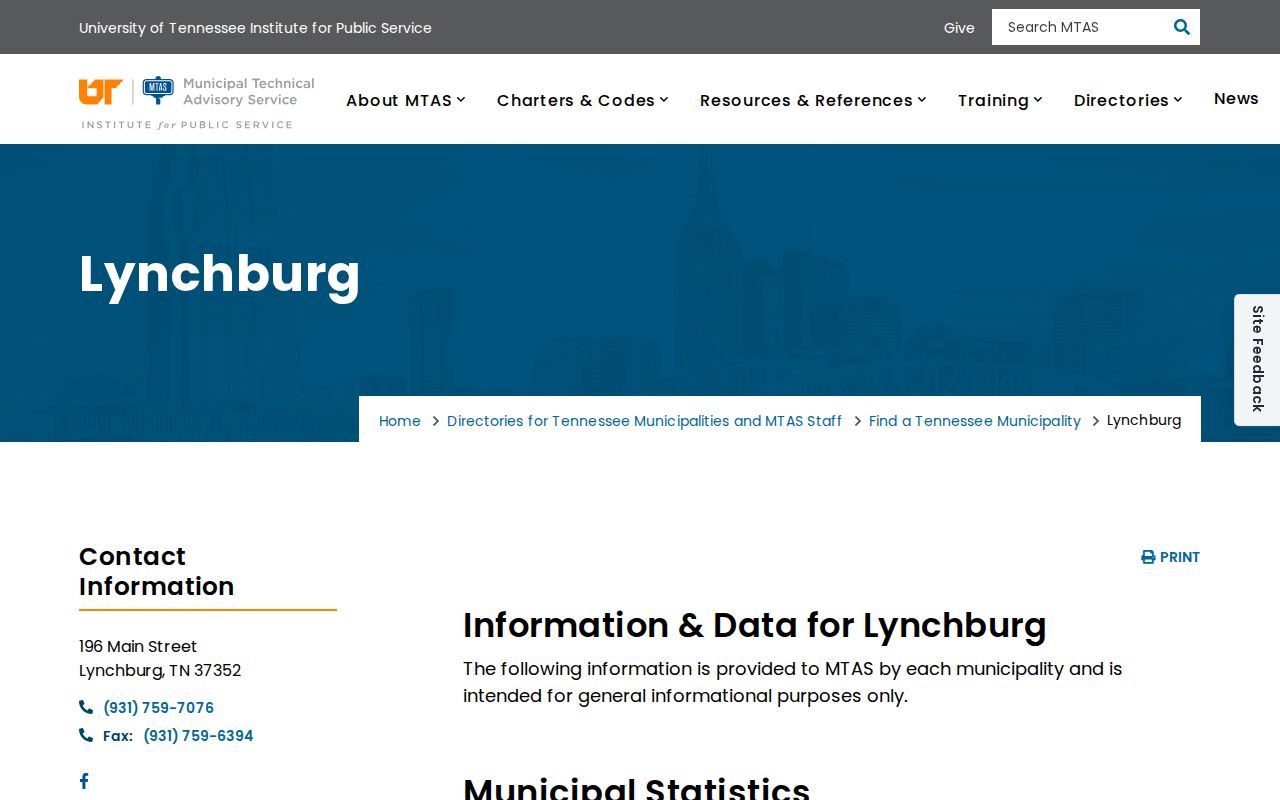
The directory reinforces that “Lynchburg” and “Moore County” labels can point into the same consolidated government even though the sheriff and clerk hold different records.
How Lynchburg–Moore County Records Reach the County
A local criminal record grows in stages. The Moore County Sheriff's Department or another arresting agency creates the report. Booking staff may take fingerprints and record the alleged charges. General Sessions opens the early court matter. An indicted felony proceeds through Circuit/Criminal Court. The final disposition then travels through criminal-justice channels to the Tennessee Bureau of Investigation's fingerprint-driven repository.
Record flow: Moore County Sheriff or arresting agency › Moore County General Sessions › 17th Judicial District Circuit/Criminal Court › Tennessee Bureau of Investigation.
A statewide TORIS report can lag or omit a cycle if fingerprints or the final disposition did not reach the repository as expected. It also does not search aliases supplied outside the requested name. When a Lynchburg TORIS result and local file disagree, use identifiers and the clerk's signed disposition to trace the difference. FOIL belongs later in the chain, when a felony offender has entered TDOC custody or supervision.
Two Lynchburg Population Measures
Census QuickFacts and MTAS publish different population concepts for this unusual place. Census counted 6,461 people in the consolidated metropolitan entity in 2020 and estimated 6,920 on July 1, 2025 across 129.22 land square miles. MTAS lists a 2025 certified municipal or urban-service population of 459, compared with 572 in 2010. The Census incorporated-place file confirms the metropolitan geography. Those figures are not interchangeable, and neither should be used to infer crime risk.
The distinction matters when using official crime sources. TBI Crime in Tennessee and the FBI Crime Data Explorer should be filtered to the reporting agency and year, with coverage checked. A countywide or metropolitan population denominator cannot be mixed casually with an urban-service count. No stable current offense count was captured in the research, so no Lynchburg crime rate should be invented.
The TBI publications catalog is the official starting point for annual crime tables.
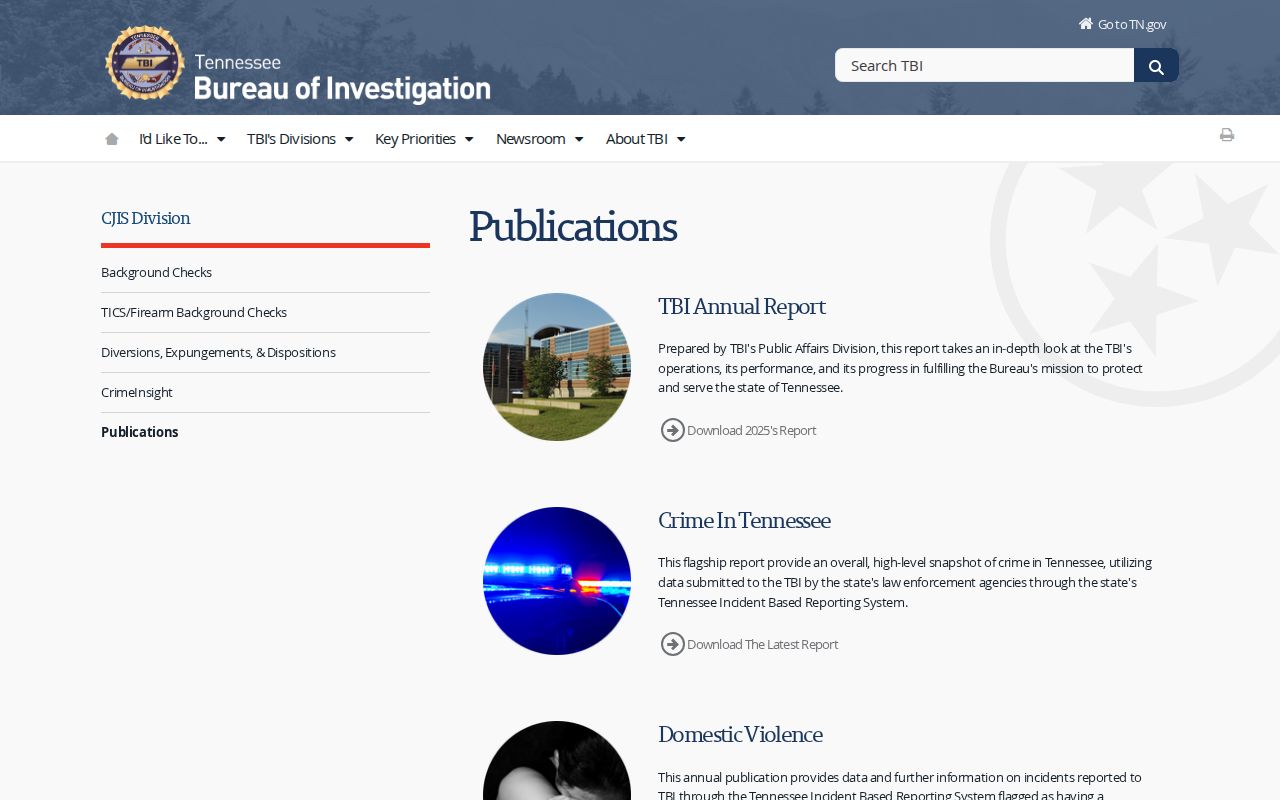
Each selected table should be labeled by agency, year, and coverage before any comparison is made.
Lynchburg’s 1871 Record Origins
Moore County was formed in 1871 from parts of Lincoln, Franklin, Coffee, and Bedford Counties. The creation act describes boundaries through roads, creeks, the Elk River, and named landholdings. For historical or genealogy work, that date can affect where an earlier record is kept. An event before county creation may sit under a predecessor jurisdiction rather than in a Moore County index.
The official reproduction of the 1871 creation act preserves the original boundary description.
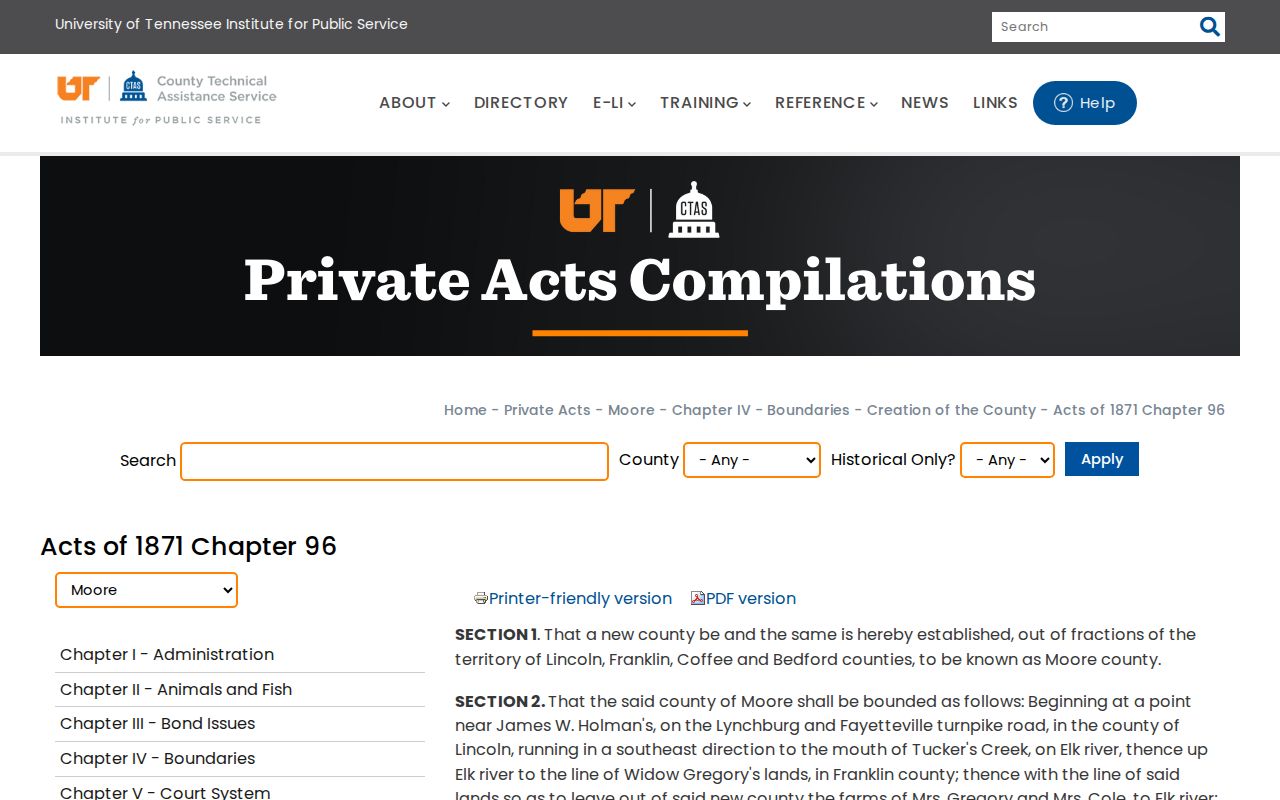
The act gives old records a geographic context that today's compact metropolitan workflow can hide.
UT sources also describe Lynchburg–Moore County's agrarian and whiskey heritage. That history is locally distinctive, but tourism lore is not crime data. Use it to understand place names and government development, not to make claims about individuals or present public safety.
Lynchburg–Moore County Record Access Rules
The Tennessee Public Records Act governs access to local government records, subject to specific confidentiality laws. Public does not mean that every field is open. Active investigative material, juvenile records, victim information, medical facts, personal identifiers, and security-sensitive content may be withheld or redacted. Ask the custodian to identify the legal basis when access is denied.
Key Statutes:
T.C.A. §10-7-503 provides the TPRA inspection framework and the response path when prompt access is impracticable.
T.C.A. §10-7-504 covers confidential records and protected categories that can require withholding or redaction.
T.C.A. §37-1-153 limits access to juvenile files and records.
T.C.A. §40-32-101 governs qualifying expungement and its effect on public criminal records.
Public Chapter 711 created a specific route, effective July 1, 2026, for a nonresident to request that person's own law-enforcement arrest, incident, crash report, or citation with a written request, identification, and affidavit. It does not erase confidentiality rules. For any request, define the record narrowly, ask about inspection before copies, and obtain a cost estimate where duplication or redaction work may apply.